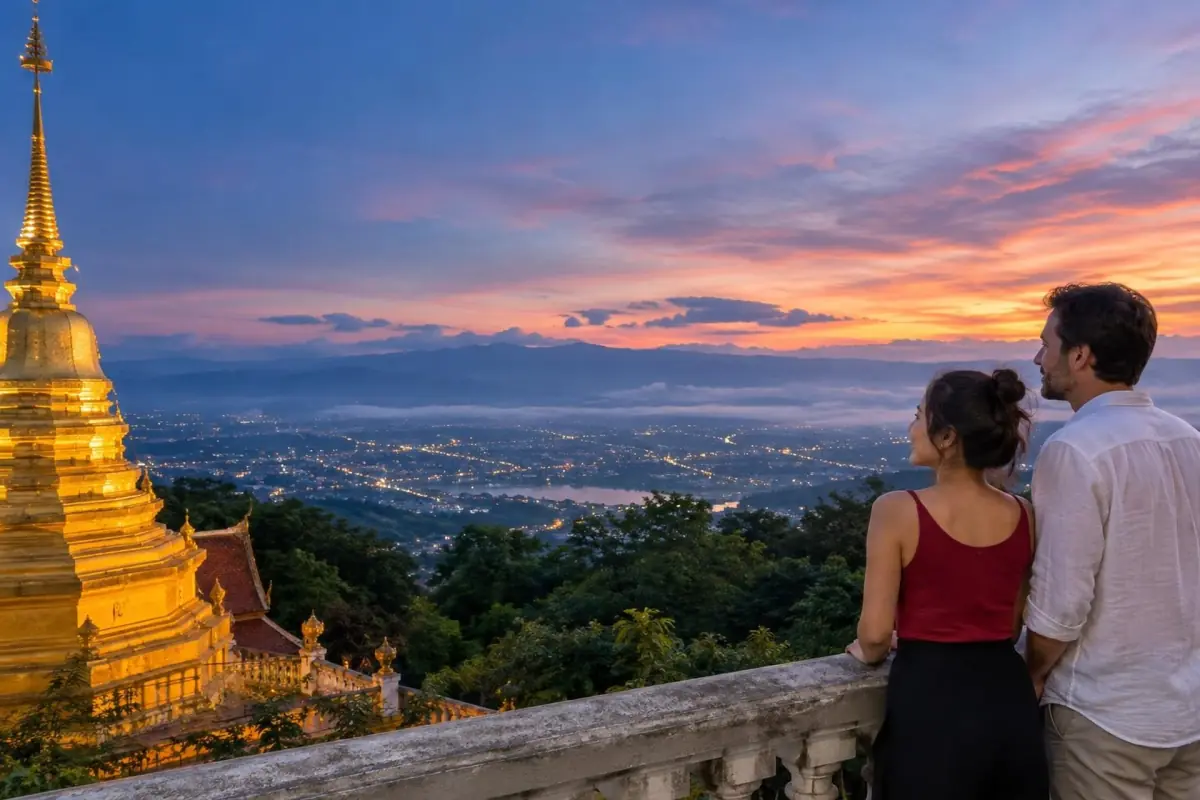
Best time to visit Doi Suthep for drier, cooler conditions
The best time to visit Doi Suthep for comparatively drier city conditions is November to February, an interpretation of Chiang Mai's long-term climate normals. December and January also have lower mean daytime maximum temperatures than March and April. Use that pattern to choose a broad travel period, then plan the mountain day around actual conditions.
The climate figures belong to Chiang Mai station 48327 at 305 m, using the 1991 to 2020 normal period in the Thai Meteorological Department's 2023 report. They describe the city station, not measurements at the temple, palace or summit. A monthly normal is background for planning rather than a forecast for your travel date.
Separate the purpose of your visit from the outlook. Temple architecture and the religious setting can remain the focus of a road visit, while a forest walk raises different questions about the day's path conditions. The temple guide and Monk's Trail guide help turn a broad seasonal preference into a specific outing. Once the season is set, see what to do at Doi Suthep in the Doi Suthep activity list.
Rain and forest-path planning
Doi Suthep walking plans need current path information as well as a weather forecast. The Chiang Mai normals show wetter city conditions from May to October than from November to February. That supports leaving flexibility for a walking day, rather than treating a chosen month as a path-access decision.
CMU describes the Pha Lat nature trail with a 2 km route and a two-hour educational-visit allowance. Those are the university's trail-description figures, not a promised walking time for every visitor. If the path is your priority, keep the walking itinerary distinct from a road visit to Wat Pha Lat and the upper temple.
An evening in the mountains
This guided trip plans sunset at Doi Pui before a temple visit, with views dependent on conditions.
Hand-picked tours, booked through GetYourGuide. Prices are indicative starting prices in US dollars (as of November 2026). Tap a tour for live availability and the current price in your currency.

Images – Doi Pui sunset and evening temple visit: Detail of a photo by Tle.sorakrai – CC BY 4.0

A guided evening with a Doi Pui sunset stop
The four-hour evening programme places the Doi Pui sunset stop before the temple visit, with entry included and the rail extra; visibility depends on the weather.
Smoke and mountain visibility
Doi Suthep visibility can be affected by regional smoke even when rainfall is limited. NASA documented smoke over Chiang Mai on 22 April 2026 in a report published on 23 April 2026. That historical event illustrates why dry weather and clear air should be separate considerations when choosing a date.
NASA's account describes March and April as a typical smoke period within the dry season. It also records fire activity earlier in the year. Avoid treating November to February as a guarantee of clean air or a distant city view. Look at current conditions close to the outing rather than using a historical image as today's air report.


Chiang Mai monthly climate normals
Chiang Mai station 48327 provides the following monthly means at 305 m for 1991 to 2020, published by TMD in 2023. Maximum and minimum columns are mean temperatures; rainfall is the mean monthly amount. The figures describe city climate and should not be read as a mountain forecast.
| Month | Mean max °C | Mean min °C | Rain mm |
|---|---|---|---|
| January | 30.0 | 15.7 | 11.3 |
| February | 32.9 | 16.8 | 9.6 |
| March | 35.4 | 20.1 | 20.4 |
| April | 36.7 | 23.4 | 54.3 |
| May | 34.7 | 24.2 | 167.5 |
| June | 33.2 | 24.5 | 118.2 |
| July | 32.1 | 24.3 | 148.6 |
| August | 31.6 | 24.0 | 223.3 |
| September | 32.0 | 23.7 | 207.2 |
| October | 31.7 | 22.6 | 123.8 |
| November | 30.8 | 19.9 | 40.9 |
| December | 29.2 | 16.9 | 14.1 |
Morning or evening on the mountain
Doi Suthep morning and evening visits should be chosen by programme and return arrangements, rather than a promise of a particular sky. Keep the temple's access arrangements separate from the operating hours of the uphill rail. The transport guide helps plan both road journeys.
The four-hour evening programme watches sunset at Doi Pui and visits Doi Suthep afterwards. It includes an English-speaking guide, transport and entry fees; the rail is extra. Hotel transfers cover addresses within 5 km of Three Kings Monument, with a Thapae Gate meeting arrangement beyond that area. Accident insurance requires a passport copy or photo on the travel day. Bring your own child car seat; an infant seat costs 500 THB and needs booking at least 3 days ahead. The programme has no reviews yet.
Other mountain destinations
Doi Inthanon belongs in a separate mountain itinerary: use Doi Inthanon National Park to plan that destination independently. Keep its travel day separate from your Doi Suthep temple or walking programme.
Doi Suthep season questions
Which months suit a drier city base?
November to February have comparatively lower rainfall in Chiang Mai's 1991 to 2020 normals. That makes them a useful starting point for Doi Suthep planning, with cooler mean daytime maxima in December and January than March and April. Current rain, smoke and mountain visibility still need separate consideration.
Does the climate table show temple temperatures?
No, the Doi Suthep planning table uses Chiang Mai station 48327 at 305 m. TMD published these 1991 to 2020 normals in 2023. Use the values as city-climate context, then consult the forecast for the outing rather than assigning those temperatures directly to the temple or summit.
Where does the evening programme watch sunset?
Doi Pui is the sunset stop on the four-hour evening programme, followed by the Doi Suthep temple visit. Weather affects visibility. Entry fees are included and the rail is extra, so choose the trip for that sequence of stops rather than expecting sunset from the temple courtyard itself.