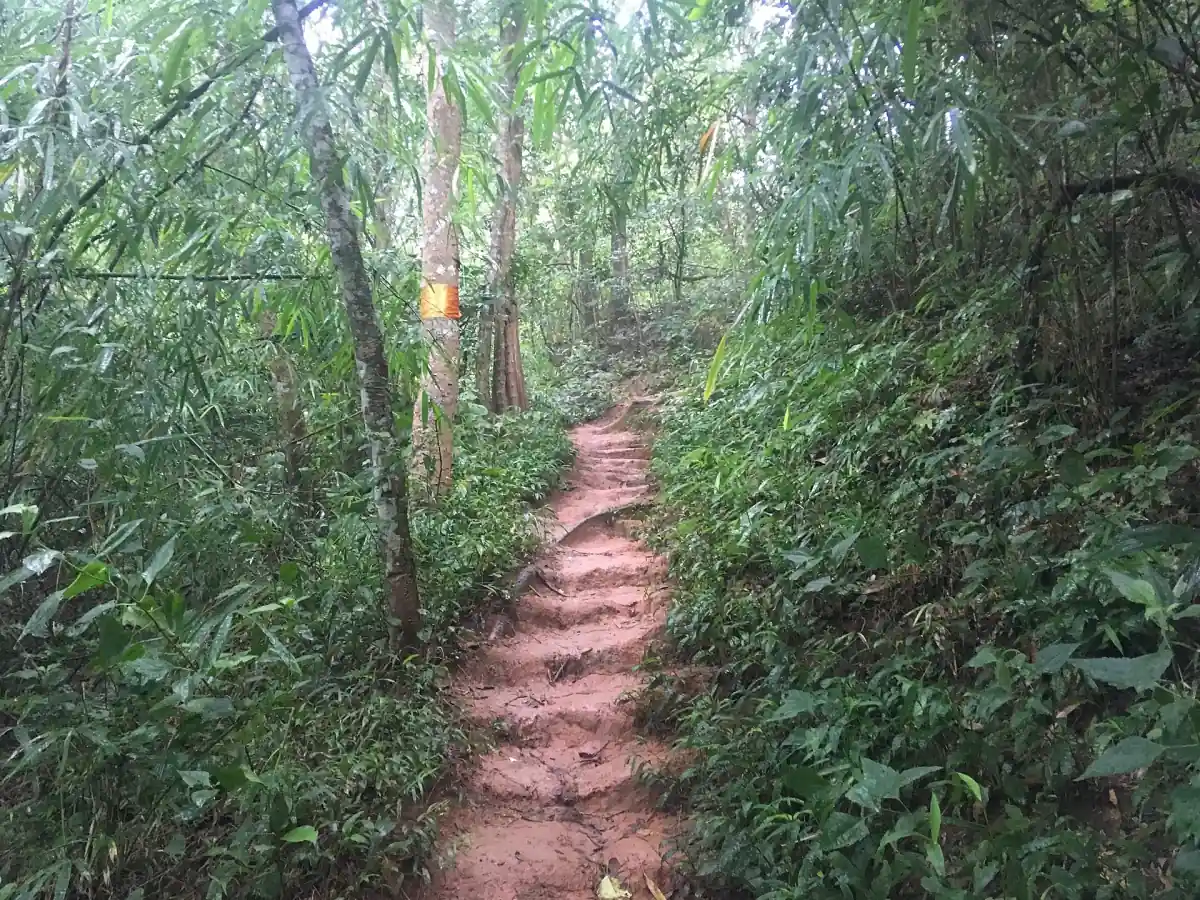

Monk’s Trail in Chiang Mai: the Pha Lat nature trail
The Monk’s Trail in Chiang Mai suits visitors who want a forest walk as part of their temple day. Wat Pha Lat is the forest temple associated with this route, while Wat Phra That Doi Suthep is a separate destination higher on the mountain. A programme combining both temples should not be read as a promise to walk every connecting stretch.
Chiang Mai University’s Doi Suthep Nature Center describes the Pha Lat nature trail as 2 km with a two-hour educational itinerary. That allowance includes the character of a learning walk; it is not a guaranteed climbing time. The university description includes rocks, Mon Phawana, Wat Sam Yop ruins, a birdwatching point and Wat Pha Lat with its chedi.
Use that description to understand the walk’s natural and historical focus. For travel-day access, follow current information at the trail and your guided programme. The university itinerary is not a current route-opening notice. Our Doi Suthep temple guide covers the upper temple separately.

Monk’s Trail hikes
Choose the private hike for included entrance and cable car tickets. The shared hike starts at Thapae Gate and charges entrance separately.
Hand-picked tours, booked through GetYourGuide. Prices are indicative starting prices in US dollars (as of November 2026). Tap a tour for live availability and the current price in your currency.

Private Monk’s Trail hike with guide
- Entrance fees
- Cable car ticket
- Expert local guide
Hotel pickup and drop-off are included; confirm the arrangement in your booking.
Check availability →
Monk’s Trail and Wat Pha Lat hike
- Professional tour guide
- Transportation by songthaew
- Glass bottle of drinking water
Entrance fees are extra. The private option includes hotel pickup.
Check availability →Images – Private Monk’s Trail hike with guide: Detail of a photo by Tle.sorakrai – CC BY 4.0; Monk’s Trail and Wat Pha Lat hike: Detail of a photo by กสิณธร ราชโอรส – CC BY-SA 4.0


Guided Monk’s Trail walks
Compare the shared songthaew outing with a private four-hour hike including temple admission and the ascent railway; the shared programme charges admission separately.
Wat Pha Lat is an active temple
Wat Pha Lat combines a living Buddhist setting with the forest and a small waterfall. The municipality identifies it as a Theravada temple, also called Sakthakhami. Its connection with the elephant carrying a relic belongs to religious tradition, rather than an independently established animal journey.
A visit to Wat Pha Lat by road differs from reaching it on the nature trail. Tourism information describing free temple visits does not settle the forest path’s park fee. Decide whether your priority is walking or seeing the temple buildings before choosing transport. The getting there guide explains the separate road journey.
Keep the temple visit respectful and quiet. For the upper Doi Suthep temple, tourism guidance recommends covered shoulders and removing shoes before the terrace. Prepare suitable clothing for a combined temple day and follow the signs at each religious space. A waterfall stop is an opportunity to look at the setting, rather than a reason to plan swimming.
Private or shared hiking
The private Monk’s Trail outing takes four hours and includes a local guide, entrance fees, the ascent railway ticket and bottled water. Hotel transfer follows the booking option. Food and other drinks are extra. The railway belongs to the upper temple visit, rather than a ride through the forest.
The shared five-hour programme includes a professional guide, red songthaew transport and a glass bottle of water. It starts at Thapae Gate; hotel collection belongs to the private option. Entrance fees, meals and other drinks are extra, and a temple offering is optional. Keep the full programme duration separate from the time spent walking.
Visitors wanting admission and the railway bundled together can choose the private four-hour hike; travellers happy to meet at Thapae Gate can take the shared five-hour programme with admission extra. The private tour comparison helps distinguish walking with a guide from a car with a driver.
Trail fees, weather and the national park
The Pha Lat nature trail needs its own fee planning, separate from a road visit to Wat Pha Lat. A Thai PBS report dated 25 September 2025 described fee collection from 1 October 2025. Treat that report as background and check the current charge locally rather than budgeting for an entirely free hike.
Doi Suthep-Pui National Park supplies the wider forest setting. Keep to marked paths, leave wildlife undisturbed and take rubbish away as general visitor practice. Rain belongs in the walking decision, so check the day’s conditions before setting out and keep your plan flexible. Do not turn this lower-trail itinerary into an unplanned continuation above Wat Pha Lat.
The season and weather guide separates Chiang Mai’s climate averages from mountain conditions. A dry month does not promise a clear view, and a tour duration does not describe the trail’s condition on your date.
Questions about the Monk’s Trail
The Monk’s Trail combines several planning decisions: educational walking time, transport and admission.
How long is the Pha Lat nature trail?
2 km is the length in Chiang Mai University’s nature-trail description, with two hours allowed for its educational itinerary. Treat those figures as a description of that walk, rather than a guaranteed ascent time. The guided programmes compared here take four or five hours for the whole outing.
Which hike includes the ascent railway?
The private four-hour Monk’s Trail programme includes the Doi Suthep ascent railway, entrance fees, a local guide and bottled water. Hotel transfer follows the selected booking option. The shared five-hour programme includes guide and songthaew transport, while admission, meals and other drinks are charged separately.
Can I visit Wat Pha Lat by road?
Yes, Wat Pha Lat lies on the road towards Wat Phra That Doi Suthep. A road visit and a nature-trail walk are different plans, particularly for fees. Choose the hiking programme for the forest experience, or use the transport guide to organise a temple visit by road.